How Commercial Restoration Differs From Residential
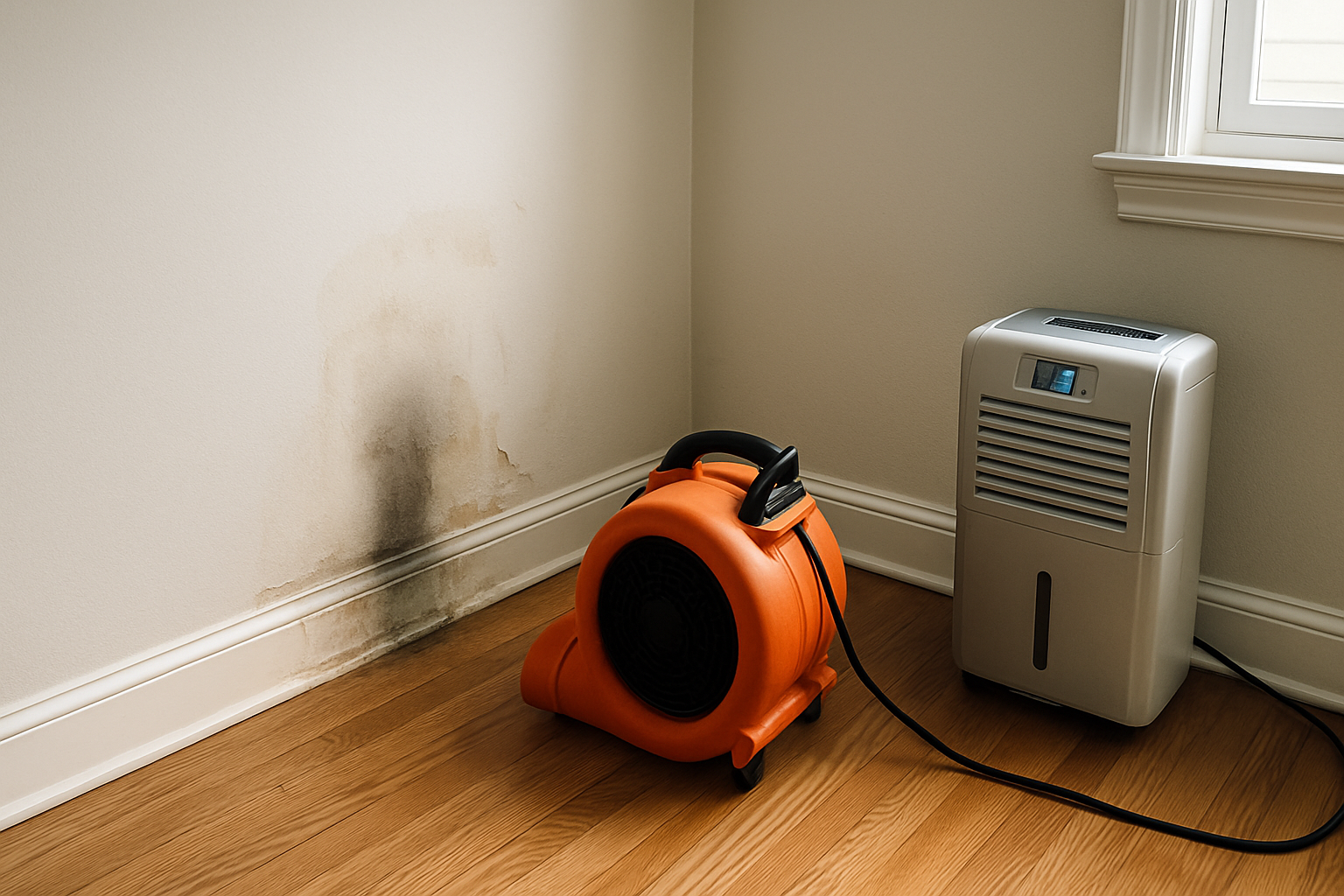
The mechanics of drying a wet office aren't different from drying a wet home — same physics, same equipment, same IICRC standards. What changes is everything ABOVE the technical layer: who pays, who you communicate with, when you can run noisy equipment, and what "done" looks like.
For commercial work in central NJ, the buyer is almost always the property manager, not the tenant. The tenant called us because their office is wet; the property manager owns the asset and signs the contract. Property managers buy restoration based on three things: speed (tenant occupancy is revenue), documentation (carrier handoff has to be clean), and predictability (they don't want to babysit the job between us and the carrier). Our standard commercial protocol is built around those three: we extract immediately, run drying with after-hours noise-managed scheduling, and deliver Xactimate scopes directly to the carrier with weekly status to the property manager in their preferred format.
Friday-discovered Monday-morning losses
The most common central NJ commercial pattern is the Friday-afternoon supply line failure that nobody discovers until Monday morning. By then, water has been migrating through subfloor and wall cavities for 60+ hours. We extract Monday AM, set drying with noise-managed equipment scheduling (loud during business hours = lost productivity in adjacent units), and target a Wednesday end-of-day "back to dry-substrate readings" so tenants can return without an extended displacement. For Cat-3 events (sewage backup, contaminated water), the timeline extends — we'll communicate the realistic re-occupancy date at hour one rather than under-promising and slipping.
Carrier mix on the central NJ commercial book
The dominant commercial carriers in this market are CNA, Hartford, Liberty Mutual, Travelers, plus Chubb and AIG on the higher-end accounts. Our scope formats and documentation packages match what those specific commercial adjusters expect — line-item Xactimate, daily moisture readings mapped to a building diagram, equipment run logs, and final clearance readings. Faster claim cycles, fewer callbacks, less friction between us and the property manager paying for the work.
Coordinating with multi-tenant property management
The Route 1 + Route 18 office park stock is overwhelmingly multi-tenant, which adds a coordination layer most residential restorers aren't equipped for. The property manager owns the asset and pays the bill. The affected tenant is whose space we're working in. Adjacent tenants are whose business operations we're potentially disrupting with equipment noise. All three groups need different communication, different access protocols, different expectations about timing. We run weekly status summaries to property management in their preferred format (Yardi, MRI, AppFolio, or just plain email), tenant-direct daily updates on access windows and re-occupancy estimates, and pre-coordinated noise scheduling for adjacent-tenant courtesy. That coordination layer is what earns us repeat-vendor status across the larger central NJ commercial property management portfolios.